Sports Medicine · Columbus, GA

Tennis elbow care from a Columbus sports medicine specialist

Lateral epicondylitis responds best to physicians who treat it often. Dr. Siraj Abdullah has spent over 16 years in Columbus, GA treating tendon injuries in athletes and active patients, with both conservative and advanced procedural options available.

SA
Dr. Siraj Abdullah, DO
Sports Medicine · Family Practice

Columbus Ambulatory Healthcare Services. Board-certified in Family Practice and Sports Medicine, affiliated with Piedmont Columbus Regional. Treating tendon and musculoskeletal conditions in Columbus, GA for over 16 years.

(334) 366-8167
1800 10th Ave, Columbus, GA 31901

Patient Story

A TenJet Patient Speaks

This patient account covers the percutaneous tenotomy procedure used for lateral epicondylitis and other chronic tendinopathies.

TenJet Patient Testimonial

Video courtesy of HydroCision, Inc., the maker of TenJet®. Individual results vary; this patient's experience is not a guarantee of outcome. Talk with a specialist about whether the procedure is appropriate for you.

16+
Years treating sports & tendon injuries in Columbus
95%
Of tennis elbow cases resolve without surgery
91.7
MIPS quality score, Centers for Medicare & Medicaid Services
15–30
Minutes for an in-office TenJet procedure

Understanding the Condition

What is lateral epicondylitis?

Despite the name, tennis elbow affects far more office workers, tradespeople, and weekend athletes than actual tennis players. Understanding the injury helps you understand why specific treatment matters.

Causes & Risk Factors
Repetitive gripping, lifting, or wrist extension gradually breaks down the tendon fibers attaching to the lateral epicondyle. Common in manual labor, racquet sports, and desk work involving repetitive typing or mousing.
Symptoms to Watch
Burning or aching pain on the outside of the elbow, weakened grip strength, and discomfort when lifting objects as light as a coffee cup. Pain often worsens with wrist extension or twisting motions.
Treatment Pathway
Most cases improve with rest, bracing, and physical therapy. Chronic or recurring cases that don't respond to conservative care are good candidates for TenJet, a minimally invasive in-office procedure.

Advanced Treatment

The TenJet procedure for chronic tennis elbow

For lateral epicondylitis that hasn't responded to rest, bracing, or physical therapy, TenJet offers a minimally invasive option that physically removes degenerated tendon tissue rather than masking the pain.

TenJet® Percutaneous Tenotomy

How it works

TenJet uses a small-gauge device, guided continuously by ultrasound, to deliver a precise, high-pressure saline jet directly to the degenerated portion of the common extensor tendon. The device's integrated aspiration channel simultaneously removes the emulsified diseased tissue while preserving the surrounding healthy tendon fibers. The entire procedure is performed through a small incision under local anesthesia, typically taking 15–30 minutes in an office setting.

Why it works for tennis elbow specifically

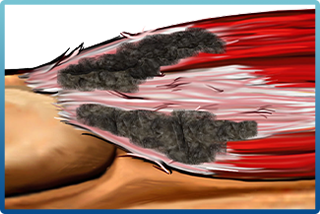
Chronic lateral epicondylitis is a tendinopathy — degeneration of the tendon's collagen structure — not a simple inflammation. Cortisone injections can calm inflammation temporarily, but they don't remove the underlying degenerated tissue, which is why pain so often returns. TenJet mechanically debrides that diseased tissue at its source, with results confirmed under real-time ultrasound imaging during the procedure itself.

How it compares
Cortisone injection
Reduces inflammation temporarily. Does not remove degenerative tissue. Pain often returns within weeks to months.
TenJet debridement
Physically removes degenerative collagen under ultrasound guidance. Small incision, local anesthesia, in-office. Addresses the source.
PRP therapy
Stimulates a healing response but doesn't remove existing diseased tissue. Often used as a complementary therapy.
Open or arthroscopic surgery
Effective for severe cases but requires a surgical center, general anesthesia, and a longer recovery period.
Small incision, performed in-office under local anesthesia
No general anesthesia or surgical center required
Real-time ultrasound guidance throughout the procedure
Preserves surrounding healthy tendon fibers
Most patients resume normal activity within days to weeks
Treats the degenerative tissue, not just the pain

Columbus Specialist

Meet your sports medicine physician

Dr. Abdullah has built his practice around treating the kinds of overuse injuries that bring most patients to a sports medicine clinic in the first place.

SA
Dr. Siraj Abdullah, DO
Sports Medicine · Family Practice
(334) 366-8167

Columbus Ambulatory Healthcare Services

Dr. Abdullah is a board-certified sports medicine and family practice physician who has treated patients in the Columbus, GA area for more than 16 years. He completed his medical training at Edward Via College of Osteopathic Medicine and has practiced locally since 2010, and is affiliated with Piedmont Columbus Regional Midtown.

His clinical focus centers on overuse and tendon injuries common to active patients — tennis elbow among them — alongside broader sports medicine and family practice care. Dr. Abdullah holds a 91.7 quality rating from the Centers for Medicare & Medicaid Services' MIPS program, placing him among the higher-performing physicians by that measure.

Board-Certified Sports Medicine 16+ Years Experience Medicare Accepted Piedmont Columbus Regional

Ready to address your tennis elbow?

Dr. Abdullah's office is accepting new patients in Columbus, GA. Call directly to schedule an evaluation and discuss whether TenJet or another treatment path is right for your condition.

Call (334) 366-8167
Physician
Dr. Siraj Abdullah, DO
Phone
(334) 366-8167
Address
1800 10th Ave
Columbus, GA 31901

TenJet® in Action

Official demonstration video from HydroCision, the maker of TenJet, plus a look at how tendinitis differs from the deeper tissue degeneration TenJet is designed to treat.

TenJet Lateral Epicondylitis Minimally Invasive Tenotomy

Healthy tendon fiber structure diagram
Healthy Tendon
Tendinitis inflamed tendon diagram
Tendinitis
Tendinosis degenerated tendon fiber diagram
Tendinosis (Chronic Degeneration)

Diagrams and video courtesy of HydroCision, Inc.

Common Questions

Frequently Asked Questions

Do I have to travel to Atlanta for treatment?

No. Columbus patients are seen locally in Columbus, Georgia. Traveling to a metro Atlanta practice is not a requirement for evaluation or for the procedure itself.

How long has my tendon problem needed to be present?

Tenotomy is generally considered for pain persisting beyond about three months that has not responded to conservative care such as rest, therapy or injections.

Will I be put to sleep?

No. Local anesthesia is used and you remain awake. That is one of the practical differences between this and an open surgical tendon debridement.

What should I bring to the first appointment?

Any prior imaging, a list of treatments you have already tried with rough dates, and your insurance information. Prior therapy and injection history genuinely affects the recommendation.

This information is general and is not medical advice. Whether any procedure is appropriate for you can only be determined by a physician who has examined you and reviewed your imaging.

Speak Directly With Each Physician's Office
Call the office below that matches the specialist you'd like to see.
SA
Dr. Siraj Abdullah, DO
Sports Medicine & Family Practice
Columbus Ambulatory Healthcare Services
(334) 366-8167